
Introduction
Blue raspberry is a flavor that has captivated candy lovers, slushy drink enthusiasts, and dessert fanatics for decades. With its striking electric blue color and tangy, sweet taste, it is instantly recognizable and evokes nostalgia for many people who grew up enjoying artificially flavored treats. However, despite its popularity, a common question arises: is blue raspberry a real fruit? Many consumers assume that the flavor comes from an actual fruit, given its familiar name and the association with raspberries.
The truth is both fascinating and a little surprising. Blue raspberry, as we know it today, is not a naturally occurring fruit. It is a creation of the food industry, designed to capture the tart sweetness of raspberries while standing out visually among other flavors. This article will explore the origins of blue raspberry, the science behind its flavor, its cultural significance, and the myths surrounding this iconic treat. By understanding the story behind blue raspberry, readers can appreciate the blend of creativity, science, and marketing that made it a household name.
From its invention in the 1970s to its modern-day dominance in candies, drinks, and desserts, blue raspberry’s journey is a perfect example of how artificial flavors shape our culinary experiences. We’ll also explore the scientific and botanical aspects that explain why no naturally bright blue raspberry exists, shedding light on the clever techniques used to create this vivid flavor sensation.
The Origins of Blue Raspberry Flavor
The blue raspberry flavor that we recognize today was invented in the 1970s as part of a wave of artificial fruit flavors emerging in the food industry. At that time, frozen drink makers like ICEE were seeking new ways to diversify their flavor offerings while making them visually distinct. Cherry, strawberry, and other red fruit flavors dominated the market, so introducing a raspberry flavor in bright blue provided a striking contrast and instantly caught the eye of consumers.
The choice of blue wasn’t inspired by any natural fruit. Instead, it was purely a marketing strategy to make raspberry flavor stand out. The vibrant color appealed to children and teens, who were the primary consumers of flavored slushies and candies. Companies quickly realized that the combination of tangy flavor and bold blue hue could generate brand recognition and increase sales, which is why blue raspberry soon became synonymous with fun, playful treats.
Interestingly, the flavor was not initially tied to any specific fruit in the natural world. Its formulation was inspired by the taste of red raspberries but modified to suit the sweet, tangy profile that candy and beverage manufacturers desired. This unique approach helped establish blue raspberry as an artificial but distinct flavor in the minds of consumers. Over time, it became one of the most popular artificial fruit flavors in the United States and other parts of the world.
Is Blue Raspberry a Real Fruit?
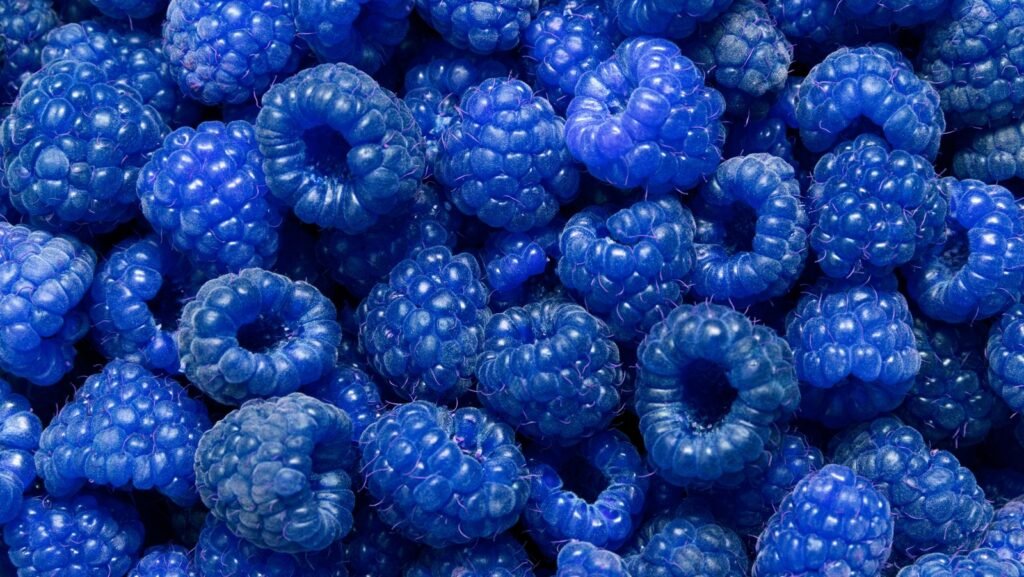
Despite its name, blue raspberry does not exist in nature. Botanically, raspberries grow in shades of red, black, or golden yellow. There are no naturally bright blue raspberries, and the flavor we associate with blue raspberry is entirely artificial. Some species, like the whitebark raspberry (Rubus leucodermis), may have dark purplish or bluish hues when ripe, but these fruits do not resemble the vivid, candy-like blue that defines the popular flavor.
The absence of a naturally blue raspberry is due to the way pigments work in plants. The compounds responsible for color in raspberries, such as anthocyanins, typically produce red, purple, or black tones. There is no pigment in raspberries that yields a true, bright blue color suitable for the striking appearance of candies and slushies. Therefore, the electric blue color we see is 100% the result of artificial dyes added to the flavor.
This distinction between natural and artificial is crucial. While real raspberries offer a variety of tastes, from sweet to tart, blue raspberry is a constructed flavor. It’s designed to mimic the tangy notes of raspberries while providing a bold and memorable taste experience. The combination of flavor chemistry and visual impact is what gives blue raspberry its unique place in the world of artificial fruit flavors, setting it apart from its natural counterparts.
The Science Behind the Flavor
Creating the iconic taste of blue raspberry involves a combination of flavor chemistry and food science. Flavorists use a blend of chemical compounds to replicate the tart and sweet characteristics of raspberries. While no single natural fruit provides the exact taste, combinations of esters and aldehydes are used to produce a flavor that is both tangy and sweet, pleasing to the palate. Compounds may include ethyl butyrate, methyl anthranilate, and other fruity esters that contribute to the complex flavor profile.
The vivid blue color that makes blue raspberry instantly recognizable comes from artificial coloring, most commonly Brilliant Blue FCF (FD&C Blue No. 1). This dye is safe for consumption and provides the eye-catching hue that makes blue raspberry treats stand out on store shelves. The combination of chemistry and visual appeal ensures that the flavor is not only memorable but also strongly associated with childhood nostalgia and fun experiences.
Interestingly, the flavor does not aim to perfectly replicate natural raspberries. Instead, it creates a heightened, almost candy-like version of the fruit’s taste. This engineered experience is a hallmark of artificial fruit flavors, allowing manufacturers to produce consistent flavors that appeal to a wide audience. The science behind blue raspberry is a testament to how food chemistry and marketing work hand-in-hand to create products that are both visually striking and delicious.
Cultural and Commercial Impact
Blue raspberry’s popularity extends far beyond its flavor. It has become a cultural icon in candies, frozen drinks, and desserts, especially in North America. Children and adults alike associate the bright blue color with fun, playfulness, and indulgence. From slushies to gummies, the flavor has carved out a niche that continues to grow in the confectionery market.
The commercial success of blue raspberry highlights the power of marketing and product differentiation. Its invention solved a visual and flavor problem for manufacturers — how to introduce a raspberry flavor that wouldn’t be confused with other red fruit options. By choosing a bold color and creating a unique taste profile, companies tapped into a consumer desire for novelty and excitement. Today, blue raspberry is one of the most recognizable artificial flavors in the world.
Beyond commercial success, blue raspberry has also inspired creativity in food and pop culture. It paved the way for other artificially colored flavors, encouraged experimental candy designs, and remains a symbol of nostalgia for many who grew up in the 1980s and 1990s. Its cultural impact demonstrates that artificial flavors can have a lasting impression, becoming part of collective memory even though the fruit itself does not exist.
Misconceptions and Fun Facts
Many myths surround blue raspberry. Some believe it is a rare or genetically modified fruit, while others assume it is naturally blue like blueberries. In reality, its creation is purely artificial, combining flavor chemistry with marketing ingenuity. Fun facts include that the flavor is often paired with other artificially colored candies to create rainbow effects and that its distinctive color is part of why it remains a favorite in nostalgic snack products.
Another interesting fact is that the psychology of color plays a role in flavor perception. Studies show that consumers often associate bright colors with sweetness or fruitiness, enhancing the appeal of artificially colored flavors like blue raspberry. This effect makes the flavor more memorable and enjoyable, further cementing its place in the candy and beverage industry.
Overall, blue raspberry’s story is a mix of science, marketing, and cultural fascination. Despite being entirely artificial, it feels familiar and comforting to consumers, proving that sometimes our taste memories are shaped more by imagination than nature.
Conclusion
In conclusion, blue raspberry is not a real fruit. It is an artificial flavor created in the 1970s to stand out in candies and beverages. Its bright blue color, tangy-sweet taste, and cultural impact make it one of the most recognizable artificial fruit flavors worldwide. While there are raspberries with dark purplish hues, none match the electric blue that defines this iconic flavor.
Understanding the origins of blue raspberry allows us to appreciate the creativity, science, and marketing behind artificial flavors. Its enduring popularity demonstrates how flavor perception and visual appeal can shape our culinary experiences, even without a natural counterpart. Blue raspberry may not grow on bushes, but it has certainly grown in popularity and cultural significance, cementing its place as a beloved artificial flavor for generations.
FAQs
- Is blue raspberry a real fruit or just a flavor?
Blue raspberry is purely an artificial flavor; it does not exist as a naturally growing fruit. - What fruit does blue raspberry taste like?
It is inspired by raspberries but has a tangy, candy-like flavor enhanced by artificial compounds. - Why is blue raspberry blue and not red?
The bright blue color was chosen for marketing purposes to distinguish it from red fruits like cherries or strawberries. - Are there any natural fruits that resemble blue raspberry?
Some raspberries like Rubus leucodermis have purplish-blue hues, but they are not the same as the artificial blue raspberry flavor. - When was blue raspberry flavor invented?
The flavor was first introduced in the 1970s, popularized by frozen drink brands like ICEE. - Why is blue raspberry so popular in candies and drinks?
Its bright color, tangy-sweet flavor, and association with fun and nostalgia make it a favorite. - Is blue raspberry safe to eat despite being artificial?
Yes, it is made from safe, approved food additives and coloring agents commonly used in candies and beverages.