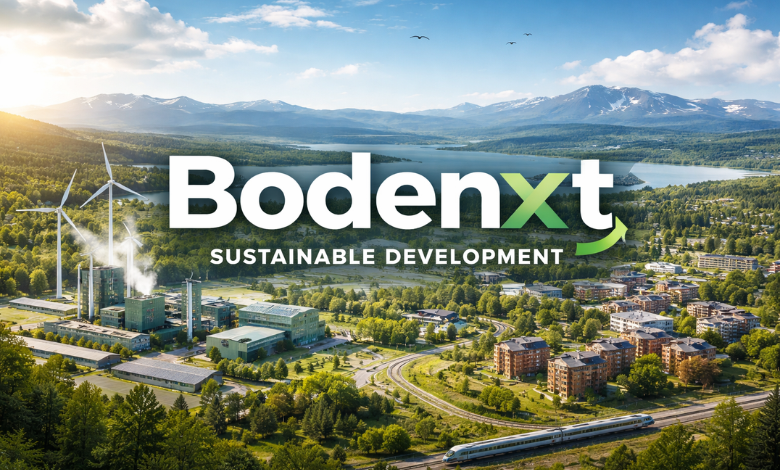
Bodenxt: Transforming Northern Sweden Through Sustainable Growth and Industrial Innovation

Introduction
Bodenxt is a forward-looking development initiative based in Boden, a municipality in northern Sweden. The program represents a strategic effort to manage and accelerate one of the most significant green industrial transformations in Europe. Designed to coordinate rapid economic growth with environmental responsibility, Bodenxt integrates workforce development, infrastructure expansion, housing growth, and sustainable industry into a unified long-term vision.
As global economies transition toward climate-neutral production and renewable energy systems, Bodenxt stands as a model for how local governments can align industrial expansion with community well-being. It is not merely an economic project; it is a comprehensive framework for reshaping society in response to technological, environmental, and demographic change.
The Background of Boden and the Need for Transformation
Boden is located in Norrbotten County in northern Sweden. Historically, the municipality was known for its military significance and later for traditional industrial activity. However, over the past decade, global shifts toward decarbonization and sustainable production created new opportunities for regions with access to renewable energy and industrial land.
Northern Sweden possesses key advantages:
- Abundant renewable energy from hydropower and wind power
- Access to raw materials
- Strategic transport connections
- Available land for large-scale industrial development
These conditions positioned Boden as an ideal site for green industrial investment. However, rapid transformation also brought challenges, including housing shortages, workforce supply needs, infrastructure demands, and environmental planning concerns. Bodenxt was developed to manage this transition in a structured and sustainable way.
What Is Bodenxt?
Bodenxt is a strategic development platform initiated by the Municipality of Boden. The name reflects a vision for “next-generation” growth, combining economic expansion with climate responsibility and social sustainability.
Rather than focusing on a single industrial project, Bodenxt coordinates multiple sectors to ensure balanced development. It connects public authorities, private investors, educational institutions, and local communities under one strategic framework.
The initiative focuses on long-term planning rather than short-term economic gain. Its objective is to ensure that the transformation benefits residents, businesses, and the environment simultaneously.
The Five Strategic Focus Areas of Bodenxt
Workforce Development and Skills Supply
A major pillar of Bodenxt is ensuring that the region has a skilled workforce capable of supporting new industries. Rapid industrial expansion requires engineers, technicians, logistics experts, construction workers, IT professionals, and administrative staff.
Bodenxt works closely with:
- Local schools and universities
- Vocational training institutions
- Employers and industry partners
- Regional labor organizations
By aligning education with industry needs, the initiative ensures that residents can access emerging job opportunities. This approach strengthens economic resilience and reduces reliance on external labor imports.
Housing and Community Expansion
Industrial growth leads to population growth. New workers and their families require housing, schools, healthcare services, and recreational spaces.
Bodenxt addresses this through:
- Sustainable residential planning
- Construction of new housing developments
- Urban design that balances density and green space
- Expansion of public services
The initiative emphasizes livability, ensuring that economic success translates into high quality of life for residents. Community expansion is planned carefully to avoid overdevelopment and environmental strain.
Industrial and Business Development
Bodenxt plays a central role in supporting business growth. The region has become internationally recognized for green industrial investments, particularly in fossil-free steel production and hydrogen-based manufacturing.
Key elements include:
- Support for sustainable manufacturing
- Attraction of international investors
- Encouragement of local entrepreneurship
- Development of supply-chain networks
The goal is to create a diversified economic ecosystem rather than dependence on a single employer or sector.
Infrastructure and Transport Innovation
Infrastructure is essential for industrial competitiveness. Bodenxt prioritizes upgrades and expansion in:
- Railway systems connecting industrial zones
- Roads and logistics corridors
- Energy grids and renewable energy distribution
- Digital and broadband infrastructure
Transport connections link Boden to national and international markets. Efficient logistics reduce emissions and improve economic efficiency.
Sustainability and Climate Responsibility
Environmental sustainability is central to the Bodenxt philosophy. The initiative promotes:
- Climate-neutral industrial processes
- Renewable energy integration
- Reduced carbon emissions
- Circular economy principles
- Sustainable urban planning
By integrating sustainability at every stage, Bodenxt ensures that growth does not compromise environmental commitments.
Green Steel and Hydrogen Development
One of the most prominent projects associated with the Boden region is the establishment of large-scale green steel production facilities. These facilities use hydrogen instead of coal in the steelmaking process, significantly reducing carbon emissions.
Traditional steel production is one of the largest sources of global carbon emissions. By contrast, hydrogen-based steel production has the potential to reduce emissions dramatically.
This innovation positions Boden as a global leader in clean industrial transformation. It also creates thousands of direct and indirect jobs across engineering, construction, maintenance, logistics, and support services.
Economic Impact and Investment
The scale of investment in the Boden region is substantial. Billions of euros have been committed to industrial facilities, infrastructure upgrades, and housing expansion.
Economic benefits include:
- Increased employment
- Growth in tax revenues
- Development of local businesses
- Attraction of international talent
- Expansion of research and innovation
Such investment strengthens Sweden’s overall competitiveness in sustainable industry.
Social Sustainability and Community Integration
Bodenxt emphasizes that economic growth must benefit residents. Rapid industrialization can create inequality if not managed properly. Therefore, the initiative promotes social inclusion and equal access to opportunity.
Community-focused measures include:
- Integration support for newcomers
- Collaboration with cultural organizations
- Strengthening healthcare and education services
- Encouraging community dialogue
This ensures that transformation remains inclusive rather than disruptive.
Challenges Facing Bodenxt
While ambitious, the initiative faces challenges:
- Housing shortages during rapid population growth
- Workforce recruitment and training gaps
- Balancing environmental protection with construction needs
- Maintaining infrastructure pace with industrial demand
However, proactive planning and cooperation between public and private stakeholders help mitigate these risks.
Global Significance of Bodenxt
Bodenxt has attracted international attention because it demonstrates how regional transformation can align with global climate goals.
Many regions worldwide struggle to transition away from fossil fuels while maintaining economic stability. Bodenxt provides an example of how coordinated planning can achieve both objectives simultaneously.
Its model integrates:
- Industrial innovation
- Renewable energy deployment
- Workforce readiness
- Social planning
- Environmental accountability
This integrated approach may serve as inspiration for other regions undergoing green transitions.
Future Outlook
Over the coming decade, Bodenxt is expected to continue expanding infrastructure, housing, and industrial capacity. Continued investment in renewable energy and digital innovation will strengthen its competitive position.
The long-term vision includes:
- A climate-neutral industrial hub
- A growing and diverse population
- Strong educational and research institutions
- Sustainable urban development
By maintaining balance between economic ambition and environmental responsibility, Bodenxt aims to secure lasting prosperity.
Conclusion
Bodenxt represents a bold and comprehensive approach to sustainable transformation. Rooted in northern Sweden’s strategic advantages, it integrates workforce development, housing expansion, industrial innovation, infrastructure growth, and environmental stewardship into one coordinated vision.
Rather than viewing sustainability and economic growth as opposing forces, Bodenxt demonstrates how they can reinforce each other. Its development model highlights the importance of planning, collaboration, and long-term commitment.
As the world navigates climate change and industrial restructuring, Bodenxt stands as a powerful example of how local initiatives can drive global progress.
Frequently Asked Questions (FAQs)
What is Bodenxt?
Bodenxt is a strategic development initiative in Boden, Sweden, designed to manage sustainable industrial growth, infrastructure expansion, housing development, and workforce planning.
Where is Bodenxt located?
It is based in the municipality of Boden in northern Sweden, within Norrbotten County.
What industries are connected to Bodenxt?
The initiative supports green steel production, renewable energy, hydrogen technology, logistics, construction, and related sustainable industries.
Why is Bodenxt important for sustainability?
It integrates climate-neutral industrial practices, renewable energy systems, and environmentally responsible urban planning into economic development.
How does Bodenxt benefit local communities?
It creates jobs, expands housing, improves infrastructure, supports education, and promotes inclusive social development alongside industrial growth.