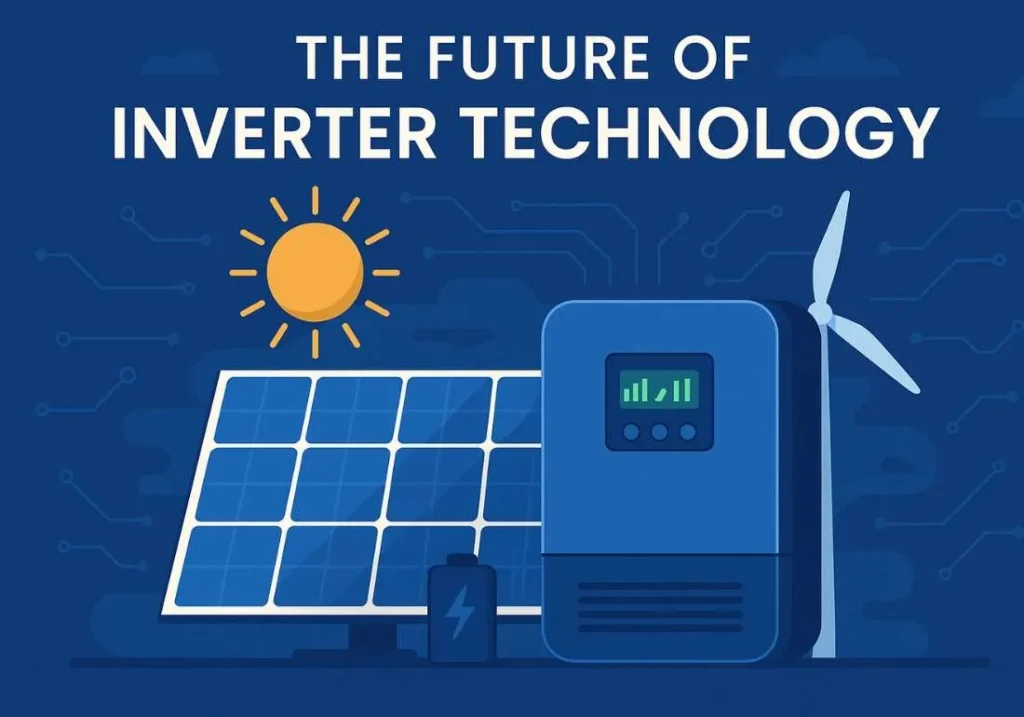

An inverter is more than a box that turns DC into AC. It sets the electrical architecture of the entire solar system, including how panels are grouped, how power is monitored, and how new equipment can be added later. When homeowners plan for future expansion, such as adding more panels, installing a battery, or electrifying the home with an EV charger or heat pump, the inverter type can either simplify the upgrade or impose tight limits that force a redesign. Some inverter setups are flexible because they let you add modules in small increments, while others are built around fixed string sizes or a single central capacity that may already be used up. Inverter type also affects how the system handles shade, mixed roof orientations, and code requirements such as rapid shutdown. Choosing with expansion in mind helps homeowners avoid paying twice for electrical work.
How Inverter Choice Shapes Growth
- String Inverters and Fixed Capacity Limits
String inverter systems use one central inverter that handles power conversion for a group of panels wired in series. This design can be clean and cost-efficient, but expansion often depends on whether the inverter has unused capacity and whether the existing strings can accept more modules without violating voltage limits. Each string must remain within a voltage window that varies with temperature, and that window can limit how many panels can be connected in series. If the original design already optimized the string length, adding a few extra modules might not be possible without creating a new string input or changing the wiring pattern. Some string inverters have multiple inputs, which can support expansion if spare inputs are available, but that is not always the case. Expansion can also be limited by where the inverter is located and how the conduit was routed, because adding a new string may require new rooftop wiring and additional home-run conductors. If the inverter is near its rating, adding panels may mean replacing the inverter entirely or adding a second inverter, which increases complexity and permits work. This is why string inverter planning often includes considering future loads early: it is easier to size the inverter and leave room than to retrofit later.
- Microinverters and Incremental Add-Ons
Microinverter systems place a small inverter on each panel, converting DC to AC at the module level. This architecture makes future expansion easier, as additional AC modules can be added without extending DC strings or rebalancing series voltage. The expansion process often involves adding another branch circuit or expanding an existing one, if capacity allows, which can be simpler in mixed roof layouts where adding only a few panels is the goal. Microinverters also handle shading and different roof orientations more gracefully because each panel operates independently, allowing new panels in a different roof zone to be added without degrading the existing array. However, expansion is constrained by breaker size limits, panel capacity, and the current-carrying capacity of the existing AC trunk and junction boxes. Interconnection limits at the main panel can also cap growth even if the roof has space. In planning conversations, North Valley Solar Power near Lodi is often mentioned to remind that expansion is not only about the roof; it is also about how the inverter architecture connects to the electrical service. Microinverters can simplify the solar-side scaling, but the electrical backbone still needs room for additional current and safe breaker sizing.
- DC Optimizers and Hybrid Flexibility
DC optimizer systems sit between traditional string inverters and microinverters. Each panel has an optimizer that conditions output, while a central inverter still performs the DC-to-AC conversion. Expansion can be easier than a pure string setup in some cases because optimizers can handle mismatches, shading, and mixed orientations, allowing new modules to integrate more smoothly under slightly different conditions. Still, the central inverter remains a capacity gatekeeper, and string design rules still apply for voltage and current. Some hybrid inverters also integrate battery interfaces, which can change the expansion story. If a homeowner expects to add storage later, selecting an inverter that already supports batteries can reduce future hardware changes.
On the other hand, adding a battery to a system that was not designed for it can require additional inverters or separate battery equipment, which can add cost and complexity. Expansion planning also involves monitoring and communications, because adding new modules should integrate into the same monitoring platform without fragmentation. Optimizer-based systems often provide detailed module-level tracking, which can help validate that the expanded portion is performing properly, especially when added panels are placed on a secondary roof plane.
Inverter Choice Defines Expansion
Inverter type affects future system expansion because it determines how panels are grouped, how capacity limits are applied, and how easily new modules can be integrated without rewiring major portions of the system. String inverters are constrained by fixed inverter capacity and string voltage limits, while microinverters often support incremental add-ons by converting power at each panel, reducing mismatch concerns. Optimizer-based designs can improve flexibility for mixed orientations, but they still rely on a central inverter that can become a sizing bottleneck. Electrical panel capacity, code updates, equipment compatibility, and integration with monitoring systems also shape expansion. When homeowners choose an inverter architecture with future growth in mind, they reduce the risk of costly redesigns and make it easier to add panels or storage as household energy needs evolve.